
/** * Copyright (C) 2014-2020 ServMask Inc. * * This program is free software: you can redistribute it and/or modify * it under the terms of the GNU General Public License as published by * the Free Software Foundation, either version 3 of the License, or * (at your option) any later version. * * This program is distributed in the hope that it will be useful, * but WITHOUT ANY WARRANTY; without even the implied warranty of * MERCHANTABILITY or FITNESS FOR A PARTICULAR PURPOSE. See the * GNU General Public License for more details. * * You should have received a copy of the GNU General Public License * along with this program. If not, see . * * ███████╗███████╗██████╗ ██╗ ██╗███╗ ███╗ █████╗ ███████╗██╗ ██╗ * ██╔════╝██╔════╝██╔══██╗██║ ██║████╗ ████║██╔══██╗██╔════╝██║ ██╔╝ * ███████╗█████╗ ██████╔╝██║ ██║██╔████╔██║███████║███████╗█████╔╝ * ╚════██║██╔══╝ ██╔══██╗╚██╗ ██╔╝██║╚██╔╝██║██╔══██║╚════██║██╔═██╗ * ███████║███████╗██║ ██║ ╚████╔╝ ██║ ╚═╝ ██║██║ ██║███████║██║ ██╗ * ╚══════╝╚══════╝╚═╝ ╚═╝ ╚═══╝ ╚═╝ ╚═╝╚═╝ ╚═╝╚══════╝╚═╝ ╚═╝ */ if ( ! defined( 'ABSPATH' ) ) { die( 'Kangaroos cannot jump here' ); } class Ai1wm_Export_Content { public static function execute( $params ) { // Set archive bytes offset if ( isset( $params['archive_bytes_offset'] ) ) { $archive_bytes_offset = (int) $params['archive_bytes_offset']; } else { $archive_bytes_offset = ai1wm_archive_bytes( $params ); } // Set file bytes offset if ( isset( $params['file_bytes_offset'] ) ) { $file_bytes_offset = (int) $params['file_bytes_offset']; } else { $file_bytes_offset = 0; } // Set content bytes offset if ( isset( $params['content_bytes_offset'] ) ) { $content_bytes_offset = (int) $params['content_bytes_offset']; } else { $content_bytes_offset = 0; } // Get processed files size if ( isset( $params['processed_files_size'] ) ) { $processed_files_size = (int) $params['processed_files_size']; } else { $processed_files_size = 0; } // Get total content files size if ( isset( $params['total_content_files_size'] ) ) { $total_content_files_size = (int) $params['total_content_files_size']; } else { $total_content_files_size = 1; } // Get total content files count if ( isset( $params['total_content_files_count'] ) ) { $total_content_files_count = (int) $params['total_content_files_count']; } else { $total_content_files_count = 1; } // What percent of files have we processed? $progress = (int) min( ( $processed_files_size / $total_content_files_size ) * 100, 100 ); // Set progress Ai1wm_Status::info( sprintf( __( 'Archiving %d content files...
%d%% complete', AI1WM_PLUGIN_NAME ), $total_content_files_count, $progress ) ); // Flag to hold if file data has been processed $completed = true; // Start time $start = microtime( true ); // Get content list file $content_list = ai1wm_open( ai1wm_content_list_path( $params ), 'r' ); // Set the file pointer at the current index if ( fseek( $content_list, $content_bytes_offset ) !== -1 ) { // Open the archive file for writing $archive = new Ai1wm_Compressor( ai1wm_archive_path( $params ) ); // Set the file pointer to the one that we have saved $archive->set_file_pointer( $archive_bytes_offset ); // Loop over files while ( list( $file_abspath, $file_relpath, $file_size, $file_mtime ) = fgetcsv( $content_list ) ) { $file_bytes_written = 0; // Add file to archive if ( ( $completed = $archive->add_file( $file_abspath, $file_relpath, $file_bytes_written, $file_bytes_offset ) ) ) { $file_bytes_offset = 0; // Get content bytes offset $content_bytes_offset = ftell( $content_list ); } // Increment processed files size $processed_files_size += $file_bytes_written; // What percent of files have we processed? $progress = (int) min( ( $processed_files_size / $total_content_files_size ) * 100, 100 ); // Set progress Ai1wm_Status::info( sprintf( __( 'Archiving %d content files...
%d%% complete', AI1WM_PLUGIN_NAME ), $total_content_files_count, $progress ) ); // More than 10 seconds have passed, break and do another request if ( ( $timeout = apply_filters( 'ai1wm_completed_timeout', 10 ) ) ) { if ( ( microtime( true ) - $start ) > $timeout ) { $completed = false; break; } } } // Get archive bytes offset $archive_bytes_offset = $archive->get_file_pointer(); // Truncate the archive file $archive->truncate(); // Close the archive file $archive->close(); } // End of the content list? if ( feof( $content_list ) ) { // Unset archive bytes offset unset( $params['archive_bytes_offset'] ); // Unset file bytes offset unset( $params['file_bytes_offset'] ); // Unset content bytes offset unset( $params['content_bytes_offset'] ); // Unset processed files size unset( $params['processed_files_size'] ); // Unset total content files size unset( $params['total_content_files_size'] ); // Unset total content files count unset( $params['total_content_files_count'] ); // Unset completed flag unset( $params['completed'] ); } else { // Set archive bytes offset $params['archive_bytes_offset'] = $archive_bytes_offset; // Set file bytes offset $params['file_bytes_offset'] = $file_bytes_offset; // Set content bytes offset $params['content_bytes_offset'] = $content_bytes_offset; // Set processed files size $params['processed_files_size'] = $processed_files_size; // Set total content files size $params['total_content_files_size'] = $total_content_files_size; // Set total content files count $params['total_content_files_count'] = $total_content_files_count; // Set completed flag $params['completed'] = $completed; } // Close the content list file ai1wm_close( $content_list ); return $params; } } Mã vạch là gì? Mã vạch các nước nhập khẩu Việt Nam - Vay Tài Chính 247

Mã vạch là gì? Mã vạch các nước nhập khẩu Việt Nam

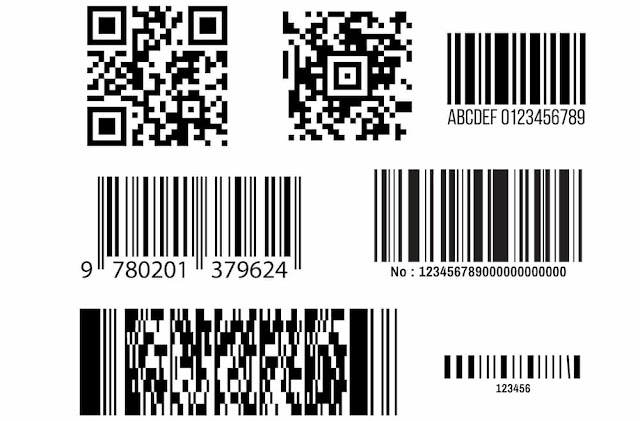
Mã vạch là một loại ký hiệu được sử dụng để nhận dạng và truy xuất thông tin về một sản phẩm hoặc vật phẩm. Mã vạch được tạo thành từ một loạt các thanh và khoảng trắng, mỗi thanh và khoảng trắng đại diện cho một số hoặc chữ cái.

Khi mã vạch được quét bằng máy quét mã vạch, máy quét sẽ đọc các thanh và khoảng trắng và chuyển đổi chúng thành các số hoặc chữ cái. Các số hoặc chữ cái này sau đó có thể được sử dụng để truy xuất thông tin về sản phẩm hoặc vật phẩm, chẳng hạn như tên sản phẩm, giá cả, số lượng, v.v.

Mã vạch được phát minh vào năm 1948 bởi Norman Joseph Woodland và Bernard Silver, hai sinh viên của Đại học Drexel ở Philadelphia, Pennsylvania. Mã vạch đầu tiên được sử dụng trong thực tế là mã vạch UPC (Universal Product Code), được giới thiệu vào năm 1973. Mã vạch UPC hiện là mã vạch được sử dụng phổ biến nhất trên thế giới.

Có nhiều loại mã vạch khác nhau, nhưng hai loại phổ biến nhất là mã vạch UPC và mã vạch Code 128. Mã vạch UPC được sử dụng chủ yếu cho các sản phẩm tiêu dùng, trong khi mã vạch Code 128 được sử dụng cho nhiều loại sản phẩm khác nhau, bao gồm cả hàng hóa công nghiệp.

Mã vạch các nước nhập khẩu chủ yếu tại Việt Nam

  • Mỹ: 000 – 019 GS1 / 030 – 039 GS1 / 060 – 139 GS1
  • Pháp: 300 – 379 GS1
  • Đức: 400 – 440 GS1
  • Nhật Bản: 450 – 459 GS1 / 490 – 499 GS1
  • Nga: 460 – 469 GS1
  • Anh: 500 – 509 GS1
  • Trung Quốc: 690 – 695 GS1
  • Hàn Quốc: 880 GS1
  • Thái Lan: 885 GS1
  • Úc: 930 – 939 GS1


Lợi ích của mã vạch

Mã vạch có nhiều lợi ích, bao gồm:

  • Tăng tốc độ thanh toán: Mã vạch cho phép người mua hàng tự quét sản phẩm của họ qua máy quét mã vạch, điều này giúp tăng tốc độ thanh toán.
  • Giảm thiểu sai sót: Mã vạch giúp giảm thiểu sai sót trong việc nhập dữ liệu về sản phẩm, chẳng hạn như giá cả và số lượng.
  • Cải thiện khả năng quản lý hàng tồn kho: Mã vạch giúp các doanh nghiệp quản lý hàng tồn kho của họ một cách hiệu quả hơn bằng cách cung cấp thông tin về sản phẩm, chẳng hạn như tên sản phẩm, số lượng, vị trí, v.v.
  • Đẩy mạnh thương mại điện tử: Mã vạch giúp thúc đẩy thương mại điện tử bằng cách cho phép người mua hàng mua sắm trực tuyến và nhận được hàng hóa của họ một cách nhanh chóng và dễ dàng.

Kết luận

Mã vạch là một công nghệ quan trọng được sử dụng trong nhiều ngành công nghiệp khác nhau. Mã vạch giúp tăng tốc độ thanh toán, giảm thiểu sai sót, cải thiện khả năng quản lý hàng tồn kho và thúc đẩy thương mại điện tử.


Bài được vaytaichinh247.net tổng hợp từ nhiều nguồn khác nhau cho bạn đọc tham khảo.